Looking for a home with real architectural presence in the middle of the city? Mount Vernon offers a version of Baltimore living that feels hard to replicate, with historic masonry homes, landmark streetscapes, and daily access to some of the city’s best cultural spaces. If you are considering historic brownstone living in Mount Vernon, it helps to understand what “brownstone” means here, how these homes function day to day, and what to watch for before you buy or sell. Let’s dive in.
Mount Vernon’s historic identity
Mount Vernon Place sits at the center of the neighborhood’s historic core. The National Park Service identifies it as a National Historic Landmark District made up of four park squares surrounding the Washington Monument, one of the earliest examples in the United States of planned urban design built around an existing monument. The monument’s cornerstone was laid in 1815, and the structure was substantially completed in 1829.
That history still shapes how the neighborhood feels today. Baltimore City CHAP describes the Mount Vernon Historic District as roughly 40 blocks with more than 1,100 buildings, and fewer than 40 are considered non-contributing. In practical terms, that means you are not looking at a few isolated historic homes. You are looking at a deeply intact urban district.
Mount Vernon also works as a mixed-use neighborhood rather than a purely residential pocket. Planning materials describe a place where homes, churches, institutions, and commercial uses all contribute to the street life. That combination helps explain why the area feels both stately and active.
What “brownstone” means in Mount Vernon
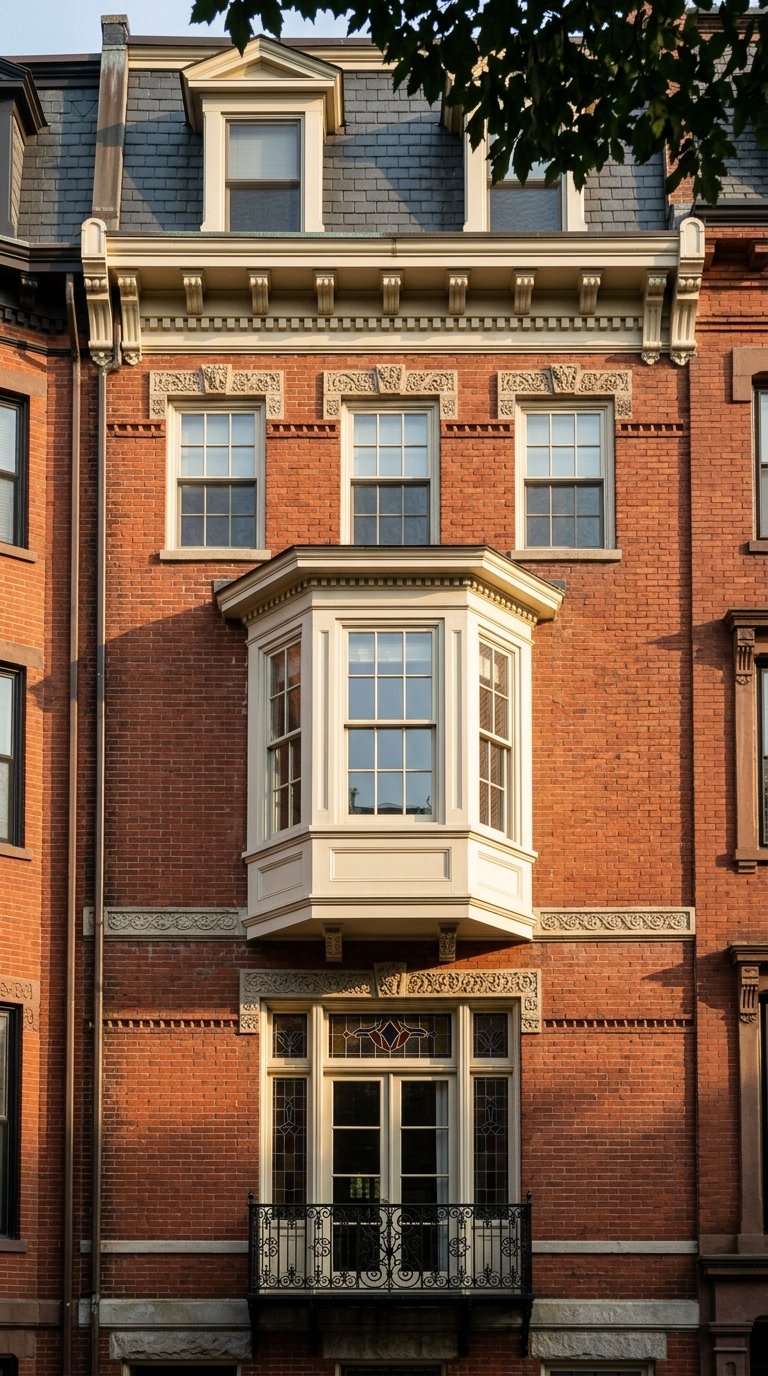
In Mount Vernon, “brownstone” usually refers more to the neighborhood’s masonry character and historic prestige than to one exact housing type. CHAP identifies load-bearing masonry, especially stone and brick, as the district’s dominant building language. You will also see recessed door and window openings, cornices, and vertically proportioned windows repeated across many facades.
That matters because buyers sometimes expect a single, uniform product when they hear the word brownstone. Mount Vernon is more layered than that. The housing stock includes small row houses, townhouses, mansion houses, early luxury apartment buildings, and larger brownstones around Mount Vernon Place.
Baltimore also has a long relationship with stone construction in this area. Baltimore Heritage notes that Grace & St. Peter’s Church on Park Avenue, opened in 1852, was Baltimore’s first true brownstone building. For today’s buyer, that is less about one church and more about understanding the neighborhood’s long-established stone-and-masonry identity.
Home types you can expect
One of the biggest advantages of Mount Vernon is variety. If you are hoping for historic detail, you have options, but those options may look very different from one block to the next. The district includes Federal, Romanesque, Italianate, and other Victorian-era styles, along with later apartment buildings and converted residences.
Townhouses and rowhouses
Many historic homes in Mount Vernon sit close to the sidewalk and were built to the front property line. That creates a strong street presence and a distinctly urban feel. Some rows have small front yards, but overall, the architecture meets the city directly.
Inside, these homes often feel vertical rather than sprawling. Buyers who are used to suburban layouts may need time to adjust to narrower frontages and stacked living spaces. The tradeoff is character, location, and a streetscape that feels visually rich.
Mansion houses and conversions
Some of Mount Vernon’s most striking residences began as large single-family homes. Over time, CHAP notes that some were divided into apartments, while others were converted to office or commercial use. Some were also replaced by larger apartment buildings.
That means your search may include homes with very different ownership structures and floor plans. A historic address here does not automatically mean a traditional single-family setup. It may mean a condo in a grand former residence, a multi-unit building, or a large townhouse with preserved period details.
Condos and apartment living
Live Baltimore lists condominiums, rowhomes, apartment buildings, and several high-rises in Mount Vernon. This helps explain why the neighborhood appeals to a wide range of buyers, from those seeking classic rowhouse living to those who want lower-maintenance ownership.
If your priority is walkability and access to city amenities, a condo or apartment-style home in Mount Vernon may offer a strong lifestyle fit. If your priority is private outdoor space or a more traditional townhouse feel, your search criteria will likely need to narrow quickly.
Rear lots, alleys, and secondary structures
CHAP notes that carriage houses, garages, and other secondary structures appear on side streets and alleys throughout the district. These features add depth to older properties and can make rear-lot space more useful than the front facade suggests.
For buyers, this is an important reminder not to judge a property too quickly from the sidewalk alone. In historic Baltimore neighborhoods, a narrow frontage can still lead to interesting rear layouts, private outdoor space, or accessory structures that support daily life.
What daily life feels like
Mount Vernon stands out because the lifestyle is not just about architecture. It is also about how easily you can move through the city and how much culture is packed into a relatively small area. Live Baltimore reports a Walk Score of 99 and a Transit Score of 100, with Penn Station and Charles Center about five minutes away and convenient access to Light Rail and Metro Subway.
That level of access can change how you use your home. For some buyers, it means a genuinely car-light lifestyle rather than simply living in a neighborhood that markets itself as walkable. For others, it means easier commuting and more freedom to enjoy the neighborhood without planning every trip around driving.
Cultural anchors shape the neighborhood
Visit Baltimore describes Mount Vernon as Baltimore’s cultural center, and the list of nearby institutions supports that description. The neighborhood includes the Walters Art Museum, Enoch Pratt Free Library, Maryland Center for History & Culture, George Peabody Library, Baltimore Center Stage, and the Baltimore Symphony Orchestra at Joseph Meyerhoff Symphony Hall.
This concentration of institutions gives Mount Vernon a daily rhythm that feels different from many other Baltimore neighborhoods. You are not just buying near a few attractions. You are living in an area where museums, libraries, performance spaces, dining, and public events are part of the normal backdrop.
The public squares matter
Mount Vernon Place is not just a landmark setting for photos. The Conservancy notes that people use the squares for coffee breaks, lunch, reading, and community programming. Events such as Summer in the Squares, Flower Mart, and Monument Lighting help make the open space feel active and relevant.
For many buyers, that public realm is part of the appeal of historic brownstone living here. The neighborhood offers architectural beauty, but it also gives you places to spend time outside your home that still feel closely tied to it.
What buyers should consider
Historic homes can be rewarding, but they ask for a more thoughtful decision-making process. In Mount Vernon, exterior work within the historic district is evaluated by CHAP for compatibility with the district’s character before a Notice to Proceed is issued. The design guidelines emphasize details such as massing, scale, materials, setbacks, and facade rhythm.
That does not mean ownership has to feel restrictive. It does mean you should go in with a clear understanding of what you are buying and how future changes may be reviewed. If you are considering a home because you plan to update or expand it, that due diligence becomes especially important.
A few practical points can help you evaluate properties more clearly:
- Look beyond the facade and ask how the interior layout supports your daily routine.
- Pay attention to rear-lot space, alleys, and any secondary structures.
- Understand whether the property is a single-family home, condo, or part of a converted building.
- If exterior changes matter to you, review how the historic setting may shape those plans.
- Use neighborhood sales data as broad context, not a shortcut for pricing one specific property.
Live Baltimore’s 2024 neighborhood sales report recorded 24 Mount Vernon sales, with an average sale price of $383,133 and a median of $299,750. Because the housing mix includes rowhomes, condos, apartments, mansions, and converted buildings, those numbers are best used as a general benchmark rather than a precise pricing rule for any one brownstone-style home.
What sellers should keep in mind
If you own a historic Mount Vernon property, your home’s appeal often depends on more than square footage alone. Buyers are paying attention to materials, facade presence, interior character, and how well the home balances preservation with livability. In a neighborhood with this much architectural depth, presentation matters.
A strategic listing approach should account for property type, condition, location within the district, and how your home compares with the neighborhood’s unusually broad housing mix. A converted residence, a classic townhouse, and a condo in a historic building may all compete for different buyer groups even if they share the same ZIP code and historic setting.
This is also where patient, Baltimore-specific guidance matters. In a neighborhood like Mount Vernon, the strongest decisions usually come from slowing down, pricing with context, and understanding how historic character translates into real buyer demand.
Historic brownstone living in Mount Vernon offers more than curb appeal. It gives you a chance to live within one of Baltimore’s most established historic settings, surrounded by architecture, public space, and cultural life that remain central to the neighborhood’s identity. If you want help evaluating a Mount Vernon home or planning the right strategy for a sale, Brian DiNardo offers a calm, data-driven approach built for Baltimore’s distinctive housing stock.
FAQs
What does brownstone living in Mount Vernon usually mean?
- In Mount Vernon, brownstone living usually refers to historic masonry homes and buildings with stone-and-brick character, rather than one exact home type.
What kinds of homes are available in Mount Vernon?
- Mount Vernon includes rowhouses, townhouses, mansion houses, condos, apartment buildings, high-rises, and converted historic residences.
What is daily life like in Mount Vernon Baltimore?
- Daily life in Mount Vernon is highly urban and walkable, with easy transit access and close proximity to museums, libraries, theaters, dining, and public squares.
What should buyers know about historic homes in Mount Vernon?
- Buyers should know that exterior changes in the historic district may require review for compatibility with the neighborhood’s historic character.
Are Mount Vernon home prices all similar?
- No, Mount Vernon home prices can vary widely because the neighborhood includes many property types, from condos and apartments to large historic residences.
Why do Mount Vernon homes feel different from newer neighborhoods?
- Mount Vernon homes often feel different because of their historic masonry construction, close-to-street placement, vertical layouts, and the neighborhood’s dense, intact historic streetscape.